
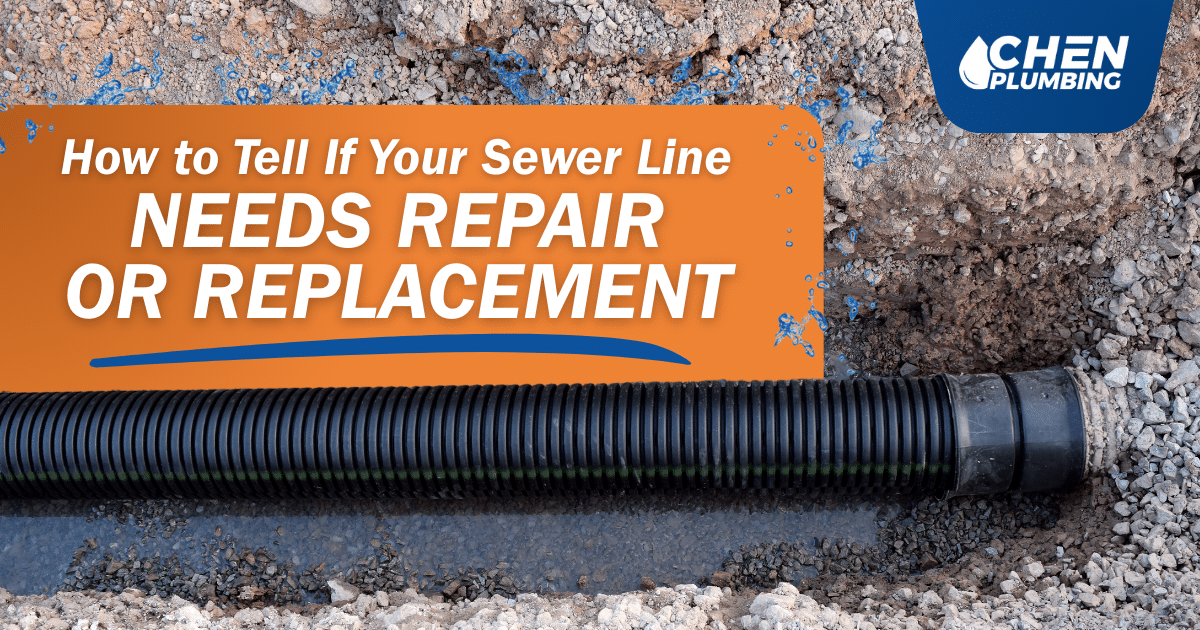
Of all the home issues you may face, few are as challenging, destructive, and downright unpleasant as a sewer line problem. Learn how to determine whether you need sewer line repair or replacement based on the issues you’re noticing with your plumbing, explore causes of common sewer line problems, and find out how the plumbing professionals at Chen Plumbing can help Georgia homeowners.
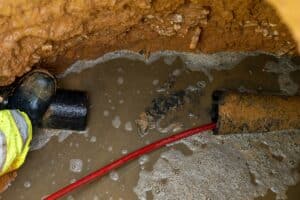
Common Signs Your Sewer Line May Be Damaged
Homeowners need to know the signs of sewer line damage to prevent minor issues from becoming serious problems. Here are the most common symptoms of a main sewer line or residential sewer line issue to be on the lookout for.
Drain Issues
A common sign of a sewer issue is noticing slow or backed-up drains throughout the house. If multiple drains are moving slowly or simultaneously backing up with wastewater, you’re likely dealing with a main sewer line clog and need removal or sewer backup repair.
Sewage Odors
If you smell sewage or a sulfuric, rotten eggs odor in your home or yard, there’s a good chance that sewer line problems are to blame. A pro can inspect the system to determine if there’s a leak and how best to fix it.
Gurgling Noises
If you notice gurgling noises from toilets after flushing or in drains while running the washer, you may be in need of sewer line repair. This is usually caused by a blockage in the main sewer line.
Rising Water Usage
If there’s a leak somewhere in your sewage line, it could result in massive amounts of water being wasted, which will show on your bills. If you notice an increase in your water bill with no change in usage, it may be time to invest in a sewer line inspection.
Very Green Grass
If you’re noticing patches of green, lush grass in your yard, it might not be cause for celebration. Green patches can occur when raw sewage leaks from an underground pipe, fertilizing the grass. You’ll likely need broken sewer pipe repair to deal with this problem.
Mold
Depending on the location of the leak, a cracked sewer line could promote the growth of hazardous mold in and around the home. A pro can inspect the pipe and determine if a leak is causing humidity and mold growth.
What Causes Sewer Line Damage?
There are a few main causes of sewer line damage in your home.
Tree Roots
A common cause of sewage line ruptures is from tree roots breaking through the pipe over time. This takes many years, but eventually a tree root can puncture the pipe, blocking the flow and allowing sewage to leak into the soil in your yard or beneath your home.
Aging Pipes
Aging cast iron or clay pipes (common in homes 50 years old or older) can weaken over time, leading to corrosion, rust, and degradation. If your sewer lines still use these outdated materials, it may be time for a sewer line replacement.
Ground Shifting
Soil movement due to earthquakes, major construction, or soil settling can all lead to ruptures, leaks, or misalignment in your sewer lines. The line may need to be excavated to be repaired.
Installation Issues
Pipes installed at an improper slope are more likely to have problems, such as recurring blockages and backups.
Clogs
Materials such as wet wipes, excess grease, hair, and hygiene products can cause severe blockages in your sewer line. Always put these materials in the garbage rather than down the drains.
Temperature Changes
Georgia’s significant temperature swings can put excess stress on sewer lines, leading to breaks and ruptures in your pipes. The pros at Chen Plumbing can advise you on more resilient pipe materials.
Sewer Line Repair vs. Sewer Line Replacement
How do you know whether you need sewer line replacement or a repair? While the best way to determine this is to have a pro inspect the system, there are a few factors to keep in mind.
Repair Scenarios
If you’re dealing with any of these problems, a plumbing professional can likely repair your existing sewer line:
- Minor cracks: Small cracks in a sewer line can usually be repaired with patches or small sections of replacement pipe.
- Isolated damage: If pipe damage is limited to a small area, it can usually be repaired, leaving the rest of the pipe intact.
- Root intrusion that can be cleared: Some root intrusions can be cleared away with methods like hydro-jetting, eliminating the need to replace the whole sewer line.
Replacement Scenarios
If you’re dealing with any of these issues, your sewer line will likely need to be replaced:
- Collapsed pipes: If sections of the pipe have collapsed entirely, it means the entire line is nearing the end of its lifespan.
- Severe corrosion: Major rust buildup typically can’t be repaired. To avoid further issues, the pipe should be replaced.
- Multiple recurring failures: If you’re dealing with continuous leaks and backups, it’s ultimately more cost-effective to replace the sewer line.
How Plumbers Diagnose Sewer Line Problems
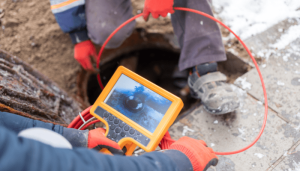
The main method of sewer line diagnosis is with sewer line cameras. These special tools allow plumbers to view the entire length of the pipe’s interior without digging, giving them a clear view of intrusions, clogs, leaks, and ruptures. This ensures they take exactly the right steps to repair the pipe with minimal disruption to your property.
How Long Do Sewer Lines Typically Last?
Sewer line lifespan mainly depends on the materials used. Modern PVC lines can last 75 to 100+ years, cast iron and concrete last 50 to 100 years, and clay lasts 50 to 60 years. If your pipes are nearing the end of their material lifespan, you’ll need to consider sewer line replacement in the near future.
Preventing Sewer Line Damage in Georgia Homes
The best way to avoid the need for sewer pipe replacement in Georgia homes is to be careful about what goes into the sewer. Only water, toilet paper, and human waste should go into your sewer line. Keep all fat, oil, and grease (FOG) out of drains, install drain strainers in tubs and sinks, and use the garbage for hygiene products and anything else that can’t be flushed.
Schedule a Sewer Line Inspection With Chen Plumbing
If you’re tired of dealing with sewer line issues and the stresses they bring, Chen Plumbing is here to help. Our team has the tools and experience to confidently diagnose and repair sewer problems of all kinds. Contact us to get a quote for your Georgia home today.