
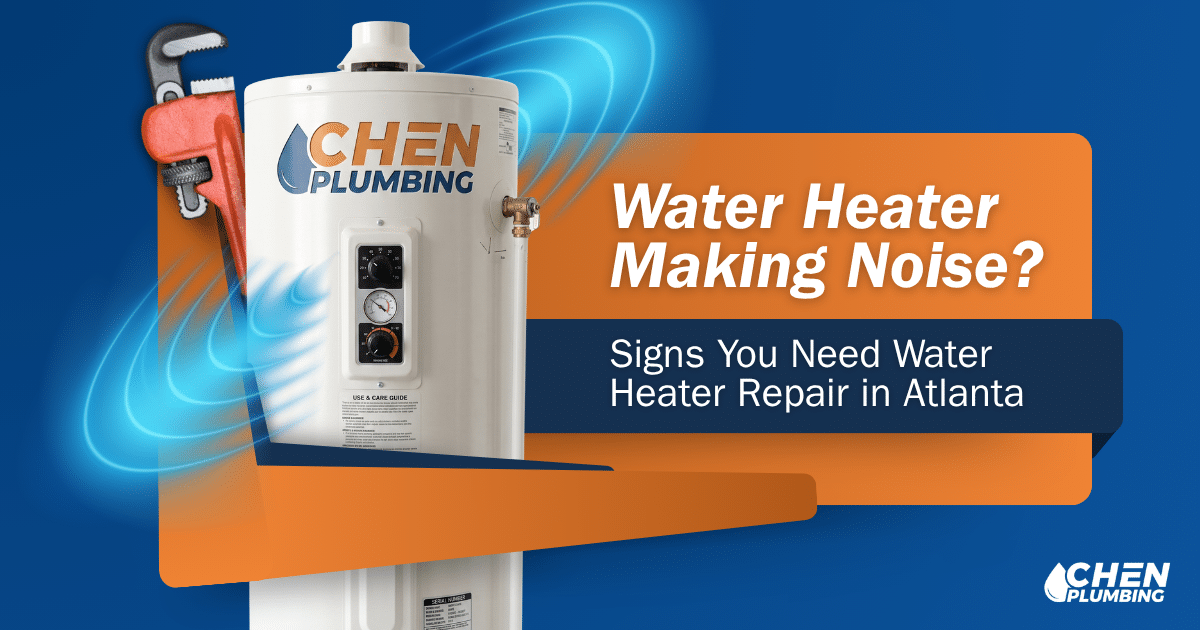
Water heaters make a few sounds during normal operation that generally shouldn’t be cause for concern. In other cases, rumbling, popping, banging, or other sounds may mean that you need to schedule water heater repair in Atlanta. Learn the reasons why your water heater is making noise and how to know when to call a professional from Chen Plumbing for water heater repair near you.
Why Is My Water Heater Making Noise?
Most water heater noises are normal, but others can signal underlying problems that require further attention. Certain factors can lead to abnormal noises, such as:
- Sediment buildup: Minerals and debris can accumulate at the bottom of a tank-style water heater over time. As the burner or heating elements heat the water, trapped water and sediment can create popping, rumbling, or banging sounds.
- Expansion tank problems: In homes with closed plumbing systems, the water heater’s expansion tank helps absorb the increased pressure created as water heats and expands. A failed, improperly charged, or incorrectly sized expansion tank can contribute to pressure fluctuations and noises around the water heater or T&P relief valve.
- High water pressure: Excessive household water pressure can put additional stress on valves, fittings, the expansion tank, and the water heater itself.
- High demand: An improperly sized water heater may struggle to keep up with household demand, causing the system to cycle more frequently and potentially accelerating wear.
Does the Type of Water Heater Affect the Noise?
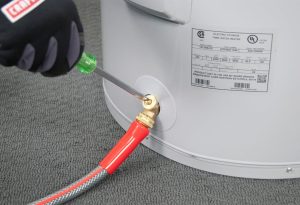
- Gas tank water heaters: Noises can originate around the burner as well as the tank, valves, expansion tank, and plumbing connections.
- Electric tank water heaters: Heating elements can become affected by mineral buildup, while pressure, sediment, valves, and expansion issues can produce many of the same noises as gas units.
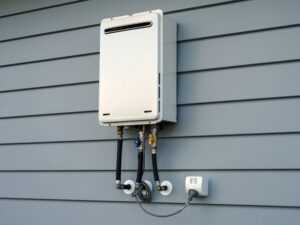
- Tankless water heaters: Scale buildup, restricted flow, fans, burners, pumps, and other internal components can produce different sounds than a storage tank.
Common Water Heater Noises and What They Can Mean
Common water heater noises may come from a few causes that may or may not need professional attention.
Popping, Banging, or Rumbling
Popping, banging, or rumbling sounds from your water heater usually indicates that the tank has accumulated a layer of hardened sediment. Atlanta homes have varying water hardness levels, depending on whether they use municipal or well water. These minerals gradually build up at the bottom of the tank and form a hardened layer over multiple heating cycles.
When water is trapped under the sediment layer during heating, bubbles of steam forcefully push through and create the resulting water heater popping noises. As sediment layers thicken, popping develops into more frequent and loud water heater rumbling noises. Tankless water heater scale buildup may also cause popping or rumbling from the heat exchanger.
Knocking or Hammering
Knocking or hammering may indicate mechanical and pressure issues. These sounds are characteristic of water hammer, where fast-closing valves suddenly cut off water flow and create a shockwave through the pipes.
Hissing or Sizzling
Condensation coming into contact with a hot surface is the simplest explanation behind hissing or sizzling from your water heater. Water heater tanks may form condensation on the exterior during extended refills, and the condensation may drip onto a surface near the burner. Continuous hissing or sizzling may otherwise indicate a small leak from the water heater.
If the hissing or dripping is coming from the temperature and pressure (T&P) relief valve, the issue may involve excessive temperature or pressure inside the tank. In Atlanta-area homes with closed plumbing systems, a failed or improperly charged expansion tank can also allow pressure to rise as heated water expands. The T&P valve is a safety device, so repeated discharge, hissing, or leaking should be inspected rather than ignored.
Hearing hissing, dripping, or other unusual sounds near your water heater? Call Chen Plumbing at (404) 809-3213 to schedule water heater repair in Atlanta.
Whistling or Screeching
High-pitched whistling or screeching from water heaters is usually due to restricted water flow. Several factors may cause water heaters to emit whistling or screeching noises:
- Faulty temperature and pressure valve
- Partially closed valves
- Sediment buildup in valves or pipes
- High water pressure
Ticking or Crackling
Ticking, tapping, or crackling is generally normal and associated with thermal expansion and contraction rather than water heater problems. Metal pipes expand slightly from hot water. When the flow stops, the pipes cool and contract, and the shifting against fasteners or other contact points creates ticking and similar sounds.
In some cases, incoming water to your home may be warmer during the summer, and it can further absorb heat from pipe materials and in hot areas of your home. Although your water heater may not have to work as hard, warmer incoming water can cause increased thermal expansion and internal pressure, potentially stressing the tank walls, fittings, and the temperature and pressure relief valve.
Should You Repair or Replace a Noisy Water Heater?
Age is one of the biggest factors when deciding whether water heater repair or replacement makes sense.
A relatively young water heater with a replaceable valve, heating element, thermostat, expansion tank, or similar component may be a good repair candidate. Replacement becomes more attractive when an older unit develops tank corrosion, recurring problems, declining efficiency, or a repair that represents a substantial portion of replacement cost.
If replacement makes more financial sense, Chen Plumbing offers flexible financing options, including qualifying 0% interest options through GreenSky, to help make a new water heater more manageable.
When Should You Call for Water Heater Repair in Atlanta?
Water heaters may show other signs of underlying problems or inefficiencies before they break down. Call a professional from Chen Plumbing in Atlanta if you notice these warning signs:
- Water heater not heating: Lukewarm water or hot water that runs out quickly suggests that the heating elements are operating inefficiently.
- Discolored hot water: If your hot water appears rusty, there may be corrosion in the tank or in the supply lines.
- Leaks or pooling: Water may leak from loose fittings, faulty valves, or from the tank itself.
- High energy bills: An unexplained spike in your energy bills may signal that your water heater is working harder than it should.
- Low water pressure: Sediment may block off valves and restrict water flow to your faucets.
If your water heater is making unusual noises or showing any of these warning signs, don’t wait for a complete loss of hot water. Call Chen Plumbing at (404) 809-3213 or schedule water heater repair online.
Get Professional Water Heater Service From Chen Plumbing
Locally owned and operated since 1998, Chen Plumbing provides professional water heater services in Atlanta. Here’s why homeowners choose our team for water heaters, plumbing inspections, and other services:
- Licensed and insured plumbers
- Flexible financing options with 0% interest options through GreenSky
- Fast response and 24/7 availability
Homeowners who want ongoing plumbing protection can also join the Win With Chen! Plumbing Membership, which provides a free annual plumbing system checkup and more. Learn more about the membership or ask our team whether it makes sense for your home.
Schedule Your Water Heater Inspection with Chen Plumbing Today
Choose Chen Plumbing for your next water heater inspection or water heater repairs near you in Atlanta, and keep your system running at peak performance year-round. Contact us today to schedule water heater inspections or preventative maintenance.
Water Heater Repair FAQs
How long does a water heater last?
Most traditional tank water heaters last 8 to 12 years, while tankless water heaters can often last 15 to 20 years with proper maintenance. Regular flushing, annual inspections, and timely repairs can help maximize your water heater’s lifespan.
How do I know if I need a new water heater?
Common signs include inconsistent hot water, rust-colored water, leaks around the tank, strange noises, rising energy bills, or a unit that’s over 10 years old. A professional inspection can determine whether repair or replacement is the better option.
Should I repair or replace my water heater?
Minor issues like a faulty thermostat or heating element can often be repaired. However, if your water heater is older, leaking from the tank, or requiring frequent repairs, replacement is usually the more cost-effective long-term solution.