

A malfunctioning garbage disposal disrupts everyday cleaning and cooking in your kitchen and can often lead to lingering odors, clogs, or slow drainage. When you experience persistent problems, it’s tough to know whether to choose between garbage disposal repair or replacement. The right decision depends on the unit’s condition and the source of the problem, and it’s important to act quickly to avoid secondary damage to your cabinets and plumbing.
Find out how garbage disposals work, common signs your unit needs repair from a plumbing professional, and when it’s time to replace your garbage disposal.
How a Garbage Disposal Works
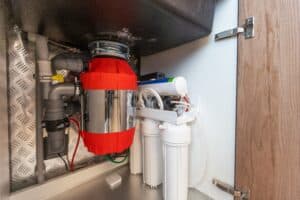
A garbage disposal breaks down food waste into smaller pieces and sends it through the drain system. In the upper chamber, or hopper, of the unit, an impeller plate spins rapidly to push food against a grinding or shredding ring, pulverizing it into a slurry. The slurry is then washed into the lower grinding chamber and into your drain system.
These are the main components of a garbage disposal:
- Electric motor
- Grinding ring
- Impeller plate
- Upper grinding chamber
- Lower grinding chamber
- Dishwasher inlet
- Flywheel
- Reset button
Common Signs Your Garbage Disposal Needs Repair
Repairs can resolve many kitchen sink disposal issues, especially with prompt attention to early signs of wear. Watch for these signs that your garbage disposal is broken.
Disposal Won’t Turn On
If the garbage disposal isn’t working or won’t start, the issue may be a tripped reset button, power loss, or a faulty switch. In some cases, the motor still works, but the unit can’t receive power.
Humming Noise Without Grinding
If your garbage disposal makes humming noises, the motor has power, but something may be blocking movement inside the chamber. Blockages may stop the impellers from turning, which prevents the unit from processing other food, strains the motor, and requires prompt repair.
Shaking or Vibrations
A disposal should produce a consistent whirring or humming sound, and shaking or rattling points to loose hardware or trapped debris. Repair prevents wear and damage to nearby plumbing.
Slow-draining Sink
Slow drains and standing water indicate that your garbage disposal is clogged or there’s a buildup inside the drain line. If the garbage disposal’s components are working as they should, the issue may be a clog in the drain line that requires augering or hydrojetting services.
Unpleasant Smells
Unpleasant smells from the garbage disposal can stem from several potential issues, most commonly decomposing buildup in the garbage disposal. A plumber can disassemble the unit to manually remove debris, or they may disassemble the p-trap if food is stuck in the bend. If there’s an odor from the drain but no immediate blockage, there may be a problem further down the drain line.
Leaks Under The Unit
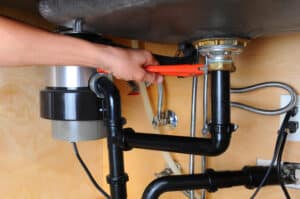
A garbage disposal leaking may indicate loose fittings, worn seals, or joints near the sink flange or discharge pipe. Even a small leak can damage the cabinet base and create moisture problems. A plumber can locate the source and fix it before damage spreads.
Signs It’s Time To Replace Your Garbage Disposal
Long-term strain and wear can result in garbage disposal failures that are impractical to repair. Your garbage disposal may be due for a replacement if you notice these signs:
- Frequent breakdowns: Repeated breakdowns indicate aging and wear across multiple components.
- Persistent leaks: Some leaks result from loose bolts, but cracks in the housing leak persistently and can’t be repaired.
- Poor performance: If the disposal frequently clogs or leaves food residue behind, the motor may be undersized for your needs.
- Overly loud grinding: Loud noises can stem from hard objects stuck in the grinding chamber. Otherwise, when internal components wear out or shift out of place, the unit may create grinding or mechanical sounds during operation.
- Rust or visible damage: Corrosion weakens internal parts and compromises structural integrity.
Common Causes of Garbage Disposal Problems
Most garbage disposal problems result from age, normal wear, or misuse:
- Grease and oil buildup: Leftover cooking grease and oil may drain as liquids, but they cool and harden inside the disposal and drain, restricting flow and increasing the likelihood of clogs.
- Fibrous or hard foods: Stringy foods and other materials may wrap around or block the motor during operation, straining it and preventing it from breaking down other food efficiently.
- Overloading the unit: Excess food prevents proper grinding and causes jams.
- Lack of water during use: Without enough water, food may not pulverize properly and can become stuck in the chamber.
- Unit is more than 10 years old: Garbage disposal lifespans range from eight to 10 years, after which they become more prone to breakdowns.
Repair vs. Replacement: What’s the Better Option?
The decision between garbage disposal repair and replacement depends on the unit’s age, the severity of the issue, and repair costs. Repairs can often restore a garbage disposal to normal performance if it’s a newer unit with an isolated issue, such as a jam or minor leak.
Replacement makes more sense when the unit breaks down repeatedly, produces a persistent loud noise, or performs poorly despite maintenance and repairs. An older system with worn internal parts often requires ongoing fixes that can quickly exceed the cost of a new unit. A replacement reduces downtime and improves reliability, especially in high-volume kitchens.
How To Prevent Garbage Disposal Problems
Proper use and routine care extend the garbage disposal’s lifespan and reduce the need for repairs. These habits reduce the risk of clogs, leaks, septic issues, and other breakdowns:
- Run cold water during operation.
- Properly dispose of grease and oil.
- Feed food into the unit gradually.
- Avoid placing starchy, fibrous, or hard foods into the disposal.
- Clean the disposal regularly with either dish soap, vinegar, or baking soda flushes.
- Don’t add harsh cleaners or chemicals to the unit.
When To Call a Professional Plumber
Some problems require professional service to prevent further damage and restore safe operation. Electrical or mechanical issues, such as a unit that won’t power on or a motor problem, require a professional diagnosis to avoid hazards. Persistent clogs that don’t resolve with basic clearing methods often require replacing individual components or the entire unit, or they may extend beyond the unit into the drain line. Leaks from the disposal body or connections can damage cabinetry and flooring if left unaddressed.
A licensed plumber identifies the source of the issue and completes repairs or installation with the correct tools and parts. Professional service reduces the risk of misdiagnosis, incorrect installation, and repeat breakdowns.

Schedule Your Garbage Disposal Service With Chen Plumbing
When your unit isn’t working as it should, schedule services with Chen Plumbing to repair or replace your garbage disposal. Our team handles clogs, leaks, and full system replacements efficiently and accurately. Contact us at Chen Plumbing for expert garbage disposal repair near you.